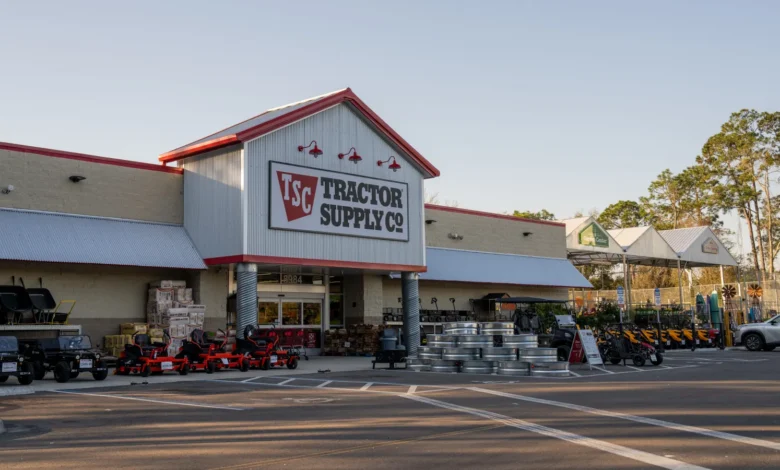
Tractor Supply Company, the prominent retailer catering to rural lifestyles, agricultural needs, and pet owners, is navigating a particularly challenging year marked by a confluence of economic, environmental, and competitive pressures. The company, headquartered in Brentwood, Tennessee, confirmed a significant downgrade in its financial outlook, a move that follows an earlier downward revision in January. This challenging environment is primarily attributed to a faltering pet business segment, the persistent burden of elevated fuel prices on its core customer base, and the intensifying encroachment of e-commerce giant Amazon into traditionally underserved rural markets. These factors, combined with adverse weather conditions in key regions, have collectively impacted comparable store sales growth and prompted a reevaluation of the company’s ambitious expansion plans.
Economic and Environmental Pressures Mount
The retailer’s second-quarter performance, particularly in May, emerged as a stark indicator of the prevailing difficulties. While April and June showed signs of growth, these were effectively neutralized by a pronounced slump in May. Speaking to analysts on Thursday, July 22, 2026, CEO Hal Lawton detailed the multifaceted challenges. A significant contributing factor was the "persistent drought conditions across several key Southeastern markets," which severely curtailed typical seasonal activities. This environmental adversity directly translated into reduced demand for lawn care products, gardening supplies, and other outdoor-related purchases, categories historically strong for Tractor Supply. The agricultural sector, a cornerstone of Tractor Supply’s customer demographic, is particularly vulnerable to such climatic shifts, impacting both their operational capacity and discretionary spending.
Beyond the immediate weather impacts, the broader economic landscape presents formidable hurdles. Customers, particularly those in rural and agricultural communities, are grappling with the sustained high costs of gasoline and diesel. Unlike their urban counterparts, Tractor Supply’s customers often face longer travel distances for essential errands and rely heavily on fuel to power farm machinery, utility vehicles, and transportation for their businesses. This inflationary pressure on fuel acts as a significant drain on household budgets, forcing a shift in consumer behavior. Lawton noted that while customers continue to prioritize spending on essentials for their pets, animals, and farms, they are demonstrably "pulling back on discretionary items and consolidating their trips." This consolidation not only reduces impulse purchases but also strains the frequency of visits to Tractor Supply stores, impacting overall transaction volume.
Furthermore, the company is contending with lingering "uncertainty around tariff refunds," a factor that, while not directly impacting consumer demand, adds a layer of financial unpredictability to its operational planning and profitability. These external economic and environmental factors underscore the fragility of consumer confidence and purchasing power in a volatile market.
Competitive Landscape Intensifies
Adding to the company’s woes is the increasingly aggressive competitive landscape, particularly the strategic expansion of Amazon into rural America. Neil Saunders, Managing Director at GlobalData, articulated this threat, stating, "Tractor Supply has benefited from its focus on rural America, but Amazon and Walmart are both encroaching on that territory." This observation highlights a critical shift in retail dynamics. Amazon, known for its extensive logistics network and market disruption capabilities, announced in 2025 its intention to invest over $4 billion to accelerate delivery speeds and expand its reach into thousands of sparsely populated areas. This initiative, while seemingly focused on general commodities, directly targets the logistical advantages Tractor Supply has long held in these regions.
While Saunders concedes that Amazon’s immediate focus might be on "commodity products rather than specialist farm and ranch supplies," where Tractor Supply retains a significant advantage due to its specialized inventory and expertise, he warns that "it is still an unhelpful trend that takes the edge off growth." The long-term implication is that as rural consumers become more accustomed to the convenience of online shopping for everyday items, the distinction between "commodity" and "specialty" products might blur, potentially eroding Tractor Supply’s market share over time. Saunders emphasizes the need for "sharper execution – particularly on range and pricing" to counteract this growing threat. Walmart, with its vast physical footprint and increasing focus on omnichannel retail, also poses a significant competitive challenge, particularly in categories like pet supplies and basic farm essentials.
Financial Performance and Analyst Reaction
The comp decline in the second quarter was a pivotal point, drawing considerable attention from market analysts. GlobalData’s Neil Saunders characterized the quarter as "one of the weakest sales performances Tractor Supply has produced in a while," adding that "at headline level, it suggests that the business is running out of steam." This sentiment reflects broader market concerns about the sustainability of Tractor Supply’s growth trajectory amidst mounting external pressures. While specific comparable store sales figures were not disclosed in the preliminary briefing, the implication of growth being "wiped out" in May suggests a notable negative shift, contrasting sharply with the positive momentum observed in April and June. This volatility underscores the sensitivity of Tractor Supply’s business model to both seasonal weather patterns and broader economic conditions impacting its target demographic.

The company’s decision to rein in its growth expectations, first in January and again in July, signals a more cautious approach to the fiscal year. This includes a notable adjustment to its store expansion strategy. Tractor Supply now plans to open between 85 and 90 new locations in 2027, a reduction from its previous target of 100 stores. This strategic recalibration reflects an acknowledgment of the current economic climate and the need to consolidate resources and focus on optimizing existing operations rather than aggressive geographical expansion.
Strategic Responses and Future Outlook
Despite the acknowledged challenges, CEO Hal Lawton maintained an optimistic stance regarding the company’s long-term prospects. "We continue to believe we are a growth company," Lawton affirmed, emphasizing that growth is anticipated from both new and existing stores. The company’s immediate strategy revolves around reinforcing its "value proposition" to customers. This involves a renewed focus on competitive pricing, loyalty programs, and offering a compelling assortment of products that cater to the essential needs of its rural customers. By emphasizing value, Tractor Supply aims to retain price-sensitive consumers who are actively consolidating their shopping trips and scrutinizing discretionary purchases.
The pet business segment, despite its current underperformance, remains a critical area for the company. Historically, pet supplies have been a robust and growing category for Tractor Supply, aligning well with its rural customer base. The current "faltering" of this segment, even as overall consumer spending on pets remains relatively strong nationwide, suggests internal challenges related to merchandising, pricing, or competition within this specific vertical. Addressing these internal issues, alongside mitigating external pressures, will be crucial for revitalizing this key growth driver.
For Tractor Supply, the path forward involves a delicate balance between adapting to evolving consumer behaviors and defending its niche against formidable competitors. The company’s deep understanding of its core "Life Out Here" customer base remains a significant asset. Strategies such as enhancing the in-store experience, optimizing its supply chain to ensure product availability, and leveraging its loyalty program (Neighbor’s Club) to drive engagement and repeat purchases will be vital. Furthermore, exploring digital initiatives that complement its physical store presence, perhaps through localized delivery services or enhanced online ordering for specialized items, could help counter Amazon’s digital advantage.

Broader Implications for Rural Retail
Tractor Supply’s current struggles offer a microcosm of the broader challenges facing specialized retailers catering to niche markets, particularly in less densely populated areas. The rising operational costs, shifting consumer preferences towards omnichannel shopping, and the pervasive reach of e-commerce giants like Amazon are reshaping the retail landscape. For rural communities, the presence of retailers like Tractor Supply is often more than just a convenience; it’s an essential resource for livelihoods and lifestyles. Should these specialized retailers falter significantly, it could lead to reduced access to critical supplies for farmers, ranchers, and rural homeowners, potentially exacerbating economic disparities between urban and rural areas.
The situation also underscores the increasing impact of climate change on retail. Unpredictable weather patterns, such as prolonged droughts or extreme conditions, directly influence demand for seasonal products and can disrupt agricultural cycles, thereby affecting the purchasing power and needs of a significant customer segment. Retailers with a strong seasonal component to their sales, particularly those tied to outdoor and agricultural activities, will need to develop more resilient forecasting and inventory management strategies.
In conclusion, the year 2026 presents a pivotal moment for Tractor Supply. While the company’s leadership maintains a growth-oriented outlook, the near-term future is undeniably complex. Successfully navigating the headwinds of a challenged pet business, inflationary fuel costs, intensified competition from retail behemoths, and the unpredictable nature of climate will require strategic agility, operational excellence, and a sustained commitment to its core value proposition. The coming quarters will reveal whether Tractor Supply can effectively adapt and reaffirm its position as a resilient leader in the evolving landscape of rural retail.